
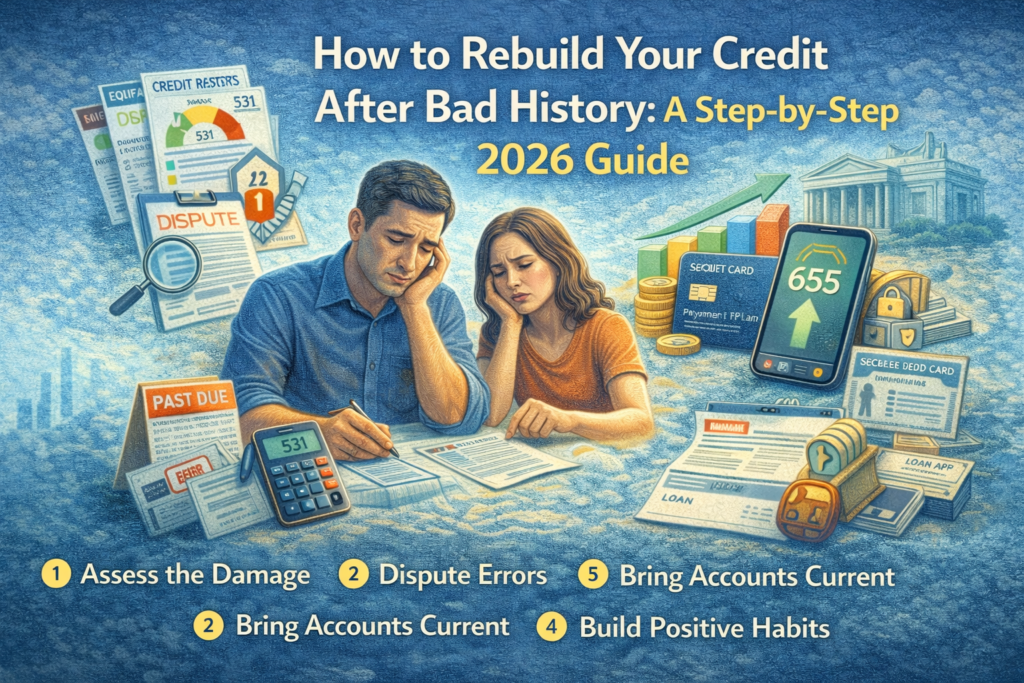
Life happens. A job loss, a medical emergency, a divorce, or just a few months of falling behind can leave your credit score in ruins. If you’re reading this, you probably know that feeling — the dread of seeing your score drop, the rejection letters from lenders, the higher interest rates that punish you when you can least afford them. But here’s the truth that most people don’t tell you: bad credit is not permanent. It’s a setback, not a life sentence. With the right strategy and consistent habits, you can rebuild your credit and regain your financial footing. This guide shows you exactly how.
Step 1: Assess the Damage — Know Where You Stand
Before you can fix your credit, you need to understand it.
Check your credit scores and reports
Start by finding out where your credit stands. Knowing your score — and what’s in your credit reports — gives you a baseline to work from.
Checking your own credit does not hurt your score. These are called soft inquiries, and they have zero impact.
Where to get your reports for free
Visit AnnualCreditReport.com, the federally authorized site for free credit reports. You can request free weekly reports from:
- Equifax
- Experian
- TransUnion
Many banks and lenders also offer free credit score tracking through their apps.
What to look for
Go through your reports carefully and check for:
- Late payments
- Collections
- Charge-offs
- Bankruptcies
- Accounts you don’t recognize
- Incorrect balances or limits
- Wrong personal information
Understanding the timeline of negative marks helps you set realistic expectations.
| Negative Item | How Long It Stays |
|---|---|
| Late payments | 7 years |
| Chapter 13 bankruptcy | 7 years |
| Chapter 7 bankruptcy | 10 years |
| Foreclosure | 7 years |
| Lawsuits and judgments | 7 years or longer |
| Collections accounts | 7 years |
Step 2: Dispute Any Errors on Your Reports
Mistakes on credit reports are more common than most people realize.
A 2024 consumer study found that 44% of people had at least one error on their credit reports. Some errors are harmless, but others can lower your score.
Common errors to watch for
- Accounts that aren’t yours
- Closed accounts reported as open
- Incorrect balances or limits
- Payments marked late when they weren’t
- Personal information errors
How to dispute an error
- Contact the credit bureau that issued the report.
- Submit a dispute online, by mail, or by phone.
- Provide documentation supporting your claim.
The bureau typically has 30 days to investigate. After the review, they must notify you of the results.
Keep records
Always keep copies of:
- Dispute letters
- Emails
- Supporting documents
This creates a paper trail if you need to escalate the issue later.
Step 3: Bring Past-Due Accounts Current
Next, focus on cleaning up existing damage.
Address negative items
If you have overdue accounts:
- Bring them current if possible
- Settle or pay off collections
- Make payment arrangements
Paid collections may stay on your report for up to seven years, but they generally have less negative impact than unpaid ones.
Contact your creditors
If you’re struggling, call your creditors and ask about:
- Hardship programs
- Payment plans
- Settlement options
- Temporary interest reductions
Many lenders are willing to work with you — but only if you reach out.
Step 4: Build Positive Credit Habits — The Foundation
Rebuilding credit isn’t about quick fixes. It’s about consistent, positive behavior over time.
Pay every bill on time, every time
Payment history makes up 35% of your credit score — the single biggest factor.
- Set up automatic payments for at least the minimum.
- Use calendar reminders.
- Never miss a due date.
If you fall behind, catch up as quickly as possible. Payments usually aren’t reported as late until they’re 30 days overdue.
Keep your credit utilization low
Credit utilization makes up about 30% of your score.
This is the amount of credit you’re using compared to your limit.
- Aim to stay below 30%.
- For faster improvement, stay under 10%.
Example:
- Total limit: $5,000
- Keep balances under $1,500 (30%)
- Ideally under $500 (10%)
Pay down cards near their limits first. Your score can improve quickly once utilization drops.
Don’t close old accounts
Closing accounts can hurt your score.
Why?
- It reduces your total available credit.
- It increases your utilization ratio.
- It shortens your credit history.
Unless the account has high fees or encourages overspending, keep it open and use it occasionally.
Limit new credit applications
Every credit application triggers a hard inquiry.
- Each inquiry can lower your score slightly.
- Too many inquiries make you look risky.
Best practices:
- Space applications at least six months apart.
- Only apply when you truly need credit.
Step 5: Use Credit-Building Tools Strategically
If your credit is damaged or very thin, certain tools can help rebuild it.
Secured credit cards
A secured card requires a cash deposit, usually between $200 and $500.
How it works:
- Your deposit becomes your credit limit.
- You use the card normally.
- You pay the balance in full each month.
After 6–12 months of responsible use, many issuers:
- Upgrade you to an unsecured card
- Refund your deposit
Pros:
- Easier approval
- Builds payment history
Cons:
- Requires upfront deposit
- May have fees
Credit-builder loans
These loans are designed specifically to build credit.
How they work:
- The lender places the loan amount in a savings account.
- You make fixed monthly payments.
- Payments are reported to the credit bureaus.
- At the end, you receive the money.
Benefits:
- Builds payment history
- Creates savings at the same time
Become an authorized user
You can be added to someone else’s credit card as an authorized user.
How it helps:
- Their positive payment history may appear on your credit report.
- This can boost your score.
Important:
- Choose someone with strong credit habits.
- Missed payments will hurt both of you.
What doesn’t work
Some financial tools don’t help build credit:
- Debit cards
- Cash payments
- Prepaid cards
- Payday loans
- Some “buy here, pay here” auto loans
These usually don’t report positive payment activity to credit bureaus.
Step 6: Consider Alternative Data
Some bills normally don’t appear on credit reports, such as:
- Rent
- Utilities
- Phone bills
However, some services now allow you to report these payments.
Benefits:
- Builds credit without new debt
- Rewards responsible payment habits
This can be especially helpful if you have limited traditional credit accounts.
Step 7: Consider Credit Counseling If Needed
If you feel overwhelmed, professional help may be a good option.
What credit counselors do
Nonprofit credit counselors can:
- Review your credit report
- Help you create a budget
- Suggest repayment strategies
Debt Management Plans (DMPs)
Some agencies offer DMPs, where they:
- Negotiate with creditors
- Lower interest rates
- Consolidate payments into one monthly bill
Where to find help
Look for counselors accredited by:
- National Foundation for Credit Counseling (NFCC)
- Financial Counseling Association of America (FCAA)
These organizations follow strict consumer-protection standards.
Step 8: Monitor Your Progress and Be Patient
Credit rebuilding takes time. There are no shortcuts.
Track your progress
- Check your credit reports regularly.
- Monitor your score through free tools.
- Watch for errors or suspicious activity.
Celebrate small wins
Progress happens in stages.
Celebrate when you:
- Pay off a collection
- Reduce your debt by 25%
- See your score increase
Small victories keep you motivated.
Adjust your strategy
If your score stops improving:
- Review your spending habits.
- Check for missed payments.
- Revisit your budget.
Rebuilding credit is an ongoing process.
The realistic timeline
There are no magic fixes. But with consistent habits:
- Noticeable improvement: 6–12 months
- Good credit range (670+): 18–24 months
Time and consistency are the real “secret.”
What Not to Do: Avoid These Pitfalls
Avoid these common mistakes:
- Falling for “credit repair” scams
- Opening unnecessary accounts
- Carrying balances to “build credit”
- Ignoring bills and collections
If a company promises to erase accurate negative information overnight, it’s a red flag.
Conclusion: The Long Game
Rebuilding your credit after bad history is not a sprint — it’s a marathon. There’s no magic switch, no secret loophole, no company that can erase your past overnight. What works is boring, simple, and consistent: pay your bills on time, keep your balances low, and give it time.
But here’s the good news: every on-time payment you make today is a brick in your new financial foundation. Every month you keep your utilization low is a step toward better rates and more opportunities. The person you are today is building credit for the person you’ll be tomorrow.
Start today. Check your reports. Make a plan. And take the first step toward your financial future.
This guide was updated for February 2026 by the SmartCardTip.com team. We believe that everyone deserves a second chance at financial health. Sources: Consumer Financial Protection Bureau, Bankrate, and federal consumer protection guidelines.