Gig drivers operate a real business — but most use the wrong credit card
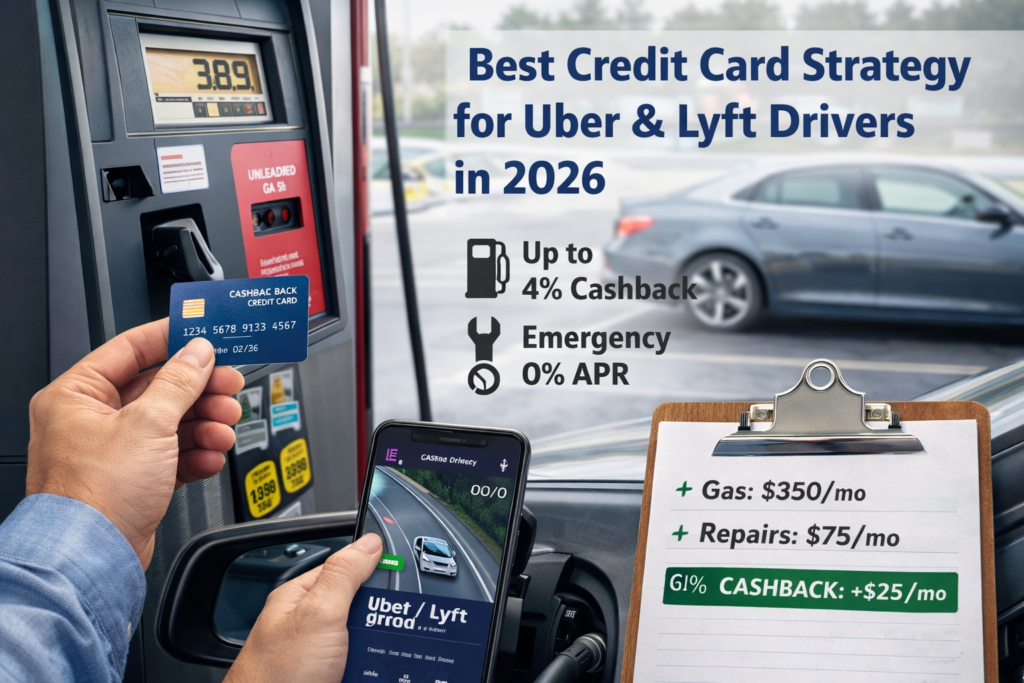
Driving for Uber or Lyft gives you flexibility — but it also creates constant expenses: gas, maintenance, insurance, and unexpected repairs.
According to a 2026 Upwork study, 36% of the U.S. workforce participates in freelance or gig work, including rideshare driving. Yet most drivers still use basic debit cards or generic credit cards, missing opportunities to earn cash back and improve cash flow.
Choosing the right credit card isn’t just about convenience. It directly impacts your net profit.
Used correctly, the right credit card can:
• Reduce operating costs
• Improve cash flow timing
• Earn cash back on unavoidable expenses
• Protect you from emergency disruptions
The real expense structure of Uber and Lyft drivers in 2026
Before choosing a card, you need to understand where your money goes.
Typical monthly expenses for full-time drivers:
| Expense Category | Monthly Average | Annual Cost |
|---|---|---|
| Gas | $350 | $4,200 |
| Maintenance | $125 | $1,500 |
| Insurance | $180 | $2,160 |
| Tires and repairs | $75 | $900 |
| Phone bill | $80 | $960 |
| Total | $810 | $9,720 |
Source: IRS mileage estimates and rideshare driver surveys.
This means drivers spend nearly $10,000 per year in operating expenses.
Most of these expenses can generate cash back if paid with the right credit card.
Why credit cards are safer than debit cards for gig workers
Debit cards immediately remove money from your bank account. Credit cards delay payment and provide protection.
Key advantages:
| Feature | Debit Card | Credit Card |
|---|---|---|
| Fraud protection | Limited | Strong |
| Cash flow flexibility | None | Yes |
| Cash back rewards | Rare | Common |
| Emergency buffer | None | Yes |
| Credit score building | No | Yes |
Credit cards act as a short-term financing tool — without interest if paid on time.
This flexibility is critical for drivers whose income fluctuates weekly.
Cash flow timing matters more than rewards
Gig income is unpredictable. Some weeks are strong. Others are slow.
Credit cards allow you to smooth income volatility.
Example:
Scenario without credit card:
Gas expense: $300
Slow week earnings: $400
Remaining cash: $100
Scenario with credit card:
Gas expense charged to card: $300
Cash preserved: $400
Payment due later: flexible
This difference improves financial stability.
The most important feature: cashback on gas and vehicle expenses
Gas is the largest recurring expense for drivers.
Example calculation:
Monthly gas spending: $350
Cashback rate: 3%
Monthly cashback: $10.50
Annual cashback: $126
Add maintenance, insurance, and general purchases, and total cashback can reach:
$300–$600 per year
This effectively reduces your operating costs.
Uber & Lyft Cashback Calculator (2026)
Estimate how much cash back you could earn from gas + maintenance spending.
If your result is under $10/month, your cash back rate is probably too low for gas and car expenses. Jump to our Cashback Cards section to learn how drivers maximize rewards
Secondary feature: 0% APR for emergency repairs
Car repairs are inevitable.
According to AAA, the average unexpected car repair costs between $500 and $1,200.
Without credit access, this can stop your income entirely.
With a 0% intro APR card:
Repair cost: $1,000
0% intro period: 12 months
Monthly payment: $83
Interest paid: $0
Without intro APR:
APR: 24%
Interest paid: $133
Total cost difference: $133 saved
Third feature: separating personal and business finances
Using a dedicated credit card for driving expenses simplifies accounting.
Benefits:
• Easier tax preparation
• Clear expense tracking
• Accurate profit calculation
• Reduced financial stress
This is especially important since rideshare drivers are considered independent contractors.
Best credit card structure for rideshare drivers (not specific brands)
The ideal rideshare credit card includes:
| Feature | Recommended Level |
|---|---|
| Cashback on gas | 2%–5% |
| Cashback on general spending | 1.5%–2% |
| Annual fee | $0 preferred |
| Intro APR | 12–18 months preferred |
| Credit limit | $3,000+ ideal |
These features maximize flexibility while minimizing risk.
Real example: How one Uber driver increases annual profit by $480
Driver profile:
Monthly expenses: $800
Cashback rate average: 3%
Monthly cashback: $24
Annual cashback: $288
Additional savings from intro APR repairs: $192
Total annual improvement: $480
This represents pure profit increase.
No additional driving required.
Credit score impact: credit cards can improve your approval odds over time
Using credit cards responsibly improves your credit score.
FICO score factors:
| Factor | Weight |
|---|---|
| Payment history | 35% |
| Credit utilization | 30% |
| Credit age | 15% |
| Credit mix | 10% |
| New credit | 10% |
Gig workers often struggle with loan approvals due to inconsistent income.
Credit cards help build approval credibility.
The biggest mistake gig drivers make with credit cards
The most dangerous mistake is carrying balances long-term.
Average credit card APR in 2026: 22.8% (Federal Reserve)
Example:
Balance: $2,000
APR: 24%
Interest paid annually: $480
This cancels cashback benefits completely.
Correct strategy:
Use card for expenses
Pay full balance monthly
This avoids interest entirely.
Step-by-step action plan for Uber and Lyft drivers
Follow this exact system:
Step 1: Apply for one cashback credit card
Prefer gas cashback and no annual fee
Step 2: Use the card only for driving expenses
Step 3: Pay full balance every month
Step 4: Track cashback earned
Step 5: Use intro APR only for true emergencies
This creates a sustainable system.
When gig drivers should avoid using credit cards
Avoid using credit cards if:
• You cannot pay balances monthly
• Your income is extremely unstable
• You already carry high-interest debt
Credit cards amplify discipline — good or bad.
Long-term advantage: access to better financial tools
Consistent credit card usage unlocks:
• Higher credit limits
• Lower loan rates
• Better financial stability
• Easier car financing approval
This becomes critical when replacing your vehicle.
The right credit card increases your net profit without driving more
Most drivers focus on increasing income.
Smart drivers focus on reducing expenses.
The right credit card improves:
• Cash flow stability
• Emergency protection
• Annual profit
• Credit score
This creates long-term financial resilience.
To maximize your rewards and reduce operating costs, explore our full guide to cashback strategies here:
https://smartcardtip.com/cashback-cards/
You’ll learn how to turn everyday expenses into measurable financial gains.