The wrong credit card can make debt more expensive
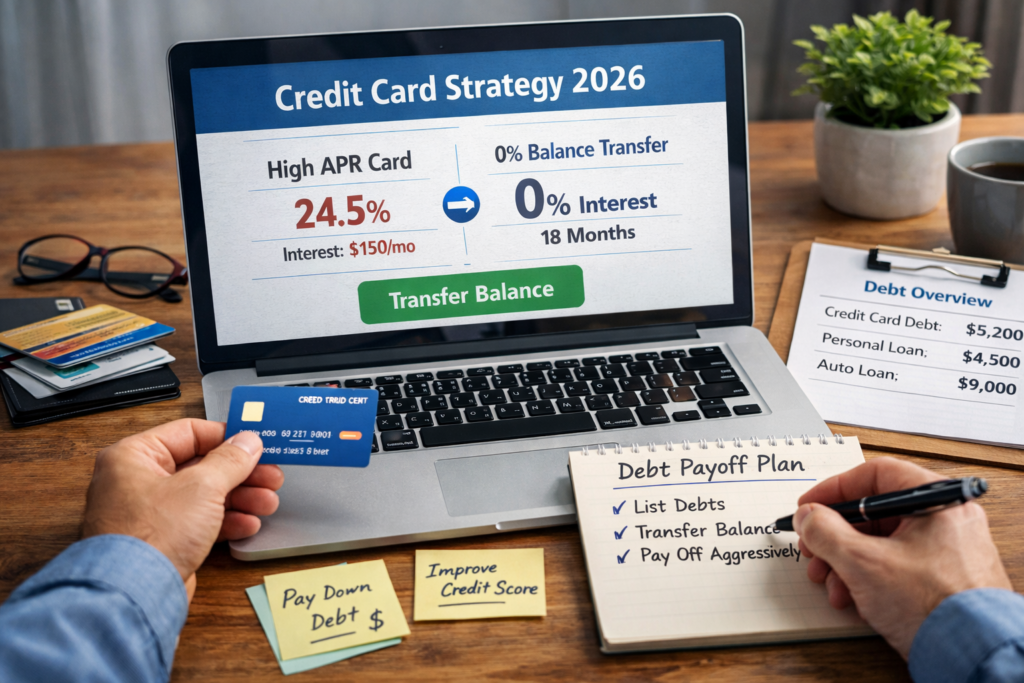
If you’re already in debt, getting another credit card might sound like the last thing you should do. But the right card — used strategically — can actually reduce interest, simplify payments, and accelerate your debt payoff timeline.
In 2026, the average credit card APR in the United States is 22.8%, according to data from the Federal Reserve. Meanwhile, millions of Americans carry multiple forms of debt simultaneously — including credit cards, auto loans, personal loans, and student loans.
Choosing the wrong card could lock you into high interest. Choosing the right one could save you thousands.
This guide explains exactly how to choose a credit card when you already have multiple types of debt — and how to use it to regain control.
Step 1: Understand the difference between revolving and fixed debt
Not all debt behaves the same way. Credit cards are “revolving debt,” while loans are “installment debt.”
Here’s why that matters:
| Debt Type | Interest Type | Flexibility | Typical APR (2026) | Strategy |
|---|---|---|---|---|
| Credit cards | Variable | High | 20%–29% | Highest priority payoff |
| Personal loans | Fixed | Medium | 10%–20% | Predictable payments |
| Auto loans | Fixed | Low | 6%–12% | Usually lower priority |
| Student loans | Fixed / variable | Medium | 5%–9% | Long-term payoff |
Credit cards typically have the highest interest rates, which means they drain your finances faster than most other debt types.
According to the Federal Reserve’s Household Debt and Credit Report, Americans carried over $1.13 trillion in credit card debt entering 2026, making it the most expensive form of consumer debt.
That’s why your credit card strategy matters more than anything else.
Step 2: Decide whether you need a balance transfer card
If your primary debt is credit card debt, the most powerful tool available is a balance transfer credit card with 0% intro APR.
These cards allow you to move existing balances and pay zero interest for a fixed period — usually between 12 and 21 months.
Example comparison:
| Scenario | Balance | APR | Monthly Payment | Interest Paid (18 months) |
|---|---|---|---|---|
| Standard credit card | $3,000 | 24% | $200 | $624 |
| 0% balance transfer card | $3,000 | 0% | $167 | $0 |
Total savings: $624
That’s money that goes toward eliminating debt instead of enriching the lender.
Balance transfer cards work best if:
• Most of your debt is from credit cards
• Your credit score is above 670
• You can pay off the balance during the intro period
They work less effectively if your debt is mostly loans, since loans typically cannot be transferred directly.
Step 3: Know when NOT to use a balance transfer card
Balance transfer cards are powerful — but they are not always the best solution.
Avoid them if:
• Your credit score is below 600
• You cannot qualify for a high enough limit
• Your debt is mostly installment loans
• You might miss payments during the intro period
Missing a payment can cancel your 0% APR promotion and trigger penalty rates above 29%.
In those cases, your priority should be stabilizing payments, not transferring balances.
Step 4: Understand how utilization affects your credit score
Your credit utilization ratio is one of the most important factors in your credit score.
It measures how much of your available credit you’re using.
Example:
| Credit Limit | Balance | Utilization | Score Impact |
|---|---|---|---|
| $5,000 | $4,000 | 80% | Negative |
| $10,000 | $4,000 | 40% | Better |
| $15,000 | $4,000 | 27% | Ideal |
Opening a new credit card increases your total available credit, which lowers your utilization — even if your debt stays the same.
Lower utilization improves your credit score over time.
This is one of the few situations where opening a new credit card can actually help your financial profile.
Step 5: Choose the right type of card based on your specific situation
There are three main types of credit cards that help people with existing debt:
Type 1: Balance transfer cards
Best for: High credit card balances
Goal: Eliminate interest temporarily
Features:
• 0% intro APR
• Transfer fee: typically 3–5%
• Requires fair to good credit
Best use case: aggressive payoff strategy
Type 2: Low APR credit cards
Best for: Long-term debt payoff
Features:
• Lower ongoing APR (15%–19%)
• No intro period dependency
• More forgiving long-term
These are safer if you cannot guarantee fast payoff.
Type 3: Secured credit cards
Best for: Poor credit or rebuilding
Features:
• Requires deposit
• Easier approval
• Helps rebuild credit score
Not ideal for transferring debt, but critical for credit rebuilding.
Step 6: Example: Real payoff comparison using different strategies
Let’s compare three strategies for someone with $5,000 in credit card debt at 24% APR.
| Strategy | Monthly Payment | Time to Pay Off | Interest Paid |
|---|---|---|---|
| Minimum payments | $125 | 22 years | $8,700 |
| Fixed aggressive payment | $300 | 20 months | $1,020 |
| 0% balance transfer | $278 | 18 months | $0 |
This is the difference between being stuck in debt for decades versus becoming debt-free in under two years.
The strategy matters more than the card itself.
Step 7: Avoid the most common mistake — adding new debt
The biggest mistake people make is transferring balances — and then continuing to spend on their old cards.
This creates two debts instead of one.
Correct strategy:
• Transfer balance
• Stop using old cards temporarily
• Focus on aggressive payoff
• Resume usage only after payoff is complete
Credit cards should be tools — not extensions of income.
Step 8: How lenders evaluate you when you already have debt
Lenders evaluate five main factors:
| Factor | Importance |
|---|---|
| Payment history | Extremely high |
| Credit utilization | Extremely high |
| Credit score | High |
| Income | Medium |
| Existing accounts | Medium |
If you’ve never missed payments, approval odds remain strong — even with existing debt.
This surprises many people.
Consistency matters more than perfection.
Step 9: When opening a new card actually improves your financial situation
Opening a new credit card helps when it:
• Reduces interest
• Lowers utilization
• Simplifies payments
• Helps consolidate balances
It hurts when it:
• Enables new spending
• Adds fees without benefits
• Creates complexity
Used properly, a new credit card is not additional debt — it’s a restructuring tool.
Step 10: Action plan — what to do today
Follow this exact sequence:
Step 1: List all your debts
Include balance, APR, and minimum payment
Step 2: Identify your highest APR debt
This is your priority target
Step 3: Check your credit score
Above 670 → balance transfer card likely viable
Step 4: Apply for ONE strategic card
Not multiple applications
Step 5: Transfer balance and commit to payoff schedule
Consistency matters more than speed.
The right card can save thousands — the wrong one costs thousands
Debt itself isn’t the problem. High interest is.
The right credit card can:
• Pause interest
• Improve your credit score
• Accelerate payoff
The wrong one can prolong debt indefinitely.
Strategy determines the outcome.
If your goal is improving your credit profile while paying off debt, read our full guide in the Credit Building section:
https://smartcardtip.com/category/credit-building/
You’ll learn how utilization, payment timing, and credit limits affect your score — and how to use them to your advantage.