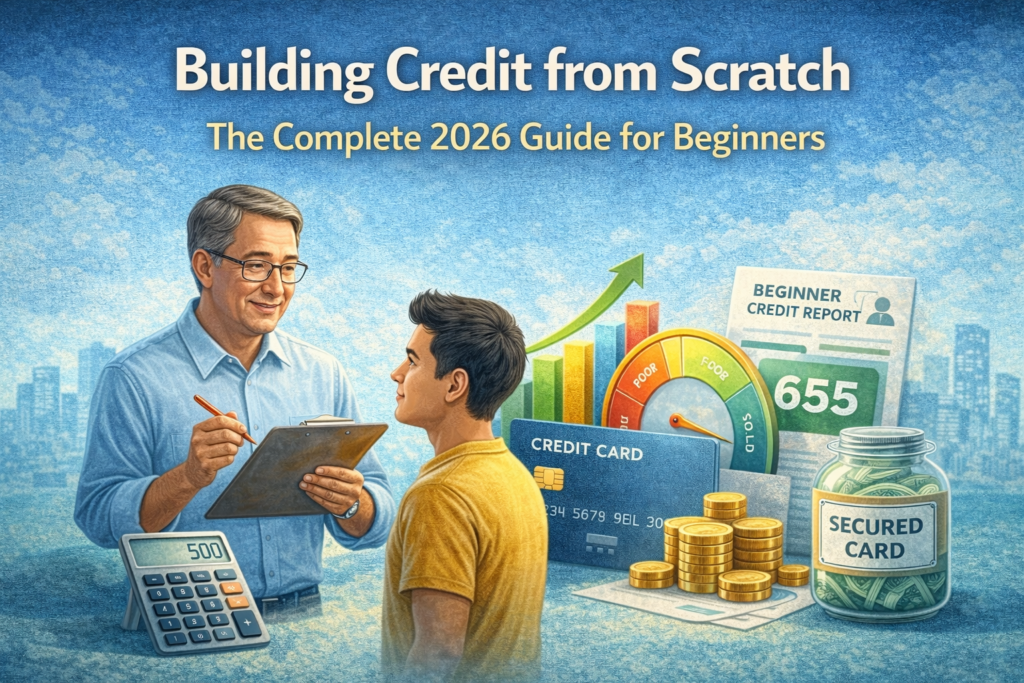
If you’ve never borrowed money or had a credit card, you don’t have a “bad” credit score. You have no score at all. You’re what the industry calls “credit invisible.” And while having no debt might feel like a good thing, in the United States, having no credit history can actually hold you back. It can make renting an apartment, getting a cell phone plan, or even landing certain jobs surprisingly difficult.
But don’t worry—building a strong credit history from scratch is absolutely doable. You don’t need to be rich, and you don’t need complicated strategies. What you need is a simple plan, consistent habits, and a little patience. This guide will show you exactly how to start.
Why Building Credit Is Important
Credit is more than just borrowing money. In the United States, it acts like a financial reputation. It tells lenders, landlords, and even employers how reliable you are with money.
Here’s how a lack of credit can affect your daily life.
Housing
Many landlords run credit checks before approving a rental application. If you have no credit history:
- You may be denied an apartment.
- You might need a co-signer.
- You could be asked to pay a larger security deposit.
Utilities and Phone Plans
Utility companies and cell phone providers often check your credit before opening an account.
Without credit:
- You may need to pay a deposit.
- You might be limited to prepaid plans.
- You could face stricter terms.
Employment
Some employers, especially in finance or roles involving money, check credit reports as part of the hiring process.
They aren’t looking for a high score. They’re looking for:
- Signs of responsibility
- A stable financial pattern
- No major red flags
Interest Rates
At some point, you may need a loan for:
- A car
- A home
- Education
Your credit history determines the interest rate you’ll pay. A strong score can save you thousands of dollars over the life of a loan.
Building credit isn’t about getting into debt.
It’s about creating a financial résumé that proves you can handle money responsibly.
Method #1: The Secured Credit Card
The secured credit card is the most common and effective way to build credit from zero.
What It Is
A secured credit card requires a cash deposit upfront. This deposit acts as collateral.
If you fail to pay your bill:
- The bank keeps your deposit.
- It uses that money to cover the debt.
How the Deposit Works
In most cases:
- You deposit a certain amount, like $300.
- Your credit limit becomes $300.
After several months of responsible use—usually 6 to 12 months—many issuers:
- Return your deposit.
- Upgrade you to a regular unsecured card.
Pros
- Easier approval with no credit history
- Builds real credit history
- Deposit is usually refundable
- Simple structure for beginners
Cons
- Requires money upfront
- Lower starting credit limits
- Some cards may have annual fees
How to Use It Successfully
The strategy is simple and powerful.
- Use the card for small, planned purchases.
- A streaming subscription
- A monthly grocery run
- A gas fill-up
- Pay the entire statement balance on time every month.
This builds your payment history, which is the most important factor in your credit score.
Method #2: Becoming an Authorized User
This method allows you to benefit from someone else’s credit history.
What It Is
An authorized user is someone added to another person’s credit card account.
- You receive a card with your name on it.
- The primary account holder is responsible for paying the bill.
How It Helps Your Credit
Many issuers report the account’s activity to the credit bureaus under the authorized user’s name.
If the primary cardholder:
- Pays on time
- Keeps balances low
That positive behavior can help build your credit history.
Conditions for It to Work
This strategy only works if:
- The primary cardholder has a long history of on-time payments.
- Their credit utilization is low.
- The issuer reports authorized user activity.
Most major issuers do report it, but not all.
Risks and Responsibilities
The primary cardholder is fully responsible for the debt. However:
- If they miss payments, your credit can be affected.
- If they carry high balances, your score may drop.
Best Practice
Choose someone you trust completely, such as:
- A parent
- A spouse
- A close family member
This should be a partnership built on trust, not a casual favor.
Method #3: Credit Builder Loans
Credit builder loans are a lesser-known but very effective way to start building credit.
What It Is
A credit builder loan works differently from a traditional loan.
You don’t receive the money upfront. Instead:
- The lender sets aside a small amount, usually $500 to $1,000.
- You make fixed monthly payments toward that amount.
- The lender reports your payments to the credit bureaus.
How It Works in Practice
Example:
- Loan amount: $600
- Term: 12 months
- Monthly payment: about $50
As you make each payment:
- Your credit report shows positive activity.
At the end of the loan:
- You receive the saved amount, minus any interest or fees.
You’ve built a payment history and created a small savings fund.
Pros
- Builds credit with an installment loan
- Adds diversity to your credit profile
- Encourages saving habits
- Structured and predictable payments
Cons
- You pay interest on the loan
- Fees may reduce the final payout
- No immediate access to the funds
Who It’s Ideal For
This option is great if:
- You don’t want a credit card.
- You want to add a different type of credit account.
- You prefer structured payments over revolving credit.
A Realistic Timeline: Your First Year of Credit
Building credit takes time. Here’s what you can realistically expect.
Month 1
You open a secured card, start a credit builder loan, or become an authorized user.
- Your credit file is created.
- You may not have a score yet.
It usually takes 3 to 6 months of activity to generate your first FICO score.
Months 3–6
Your credit score appears for the first time.
If you’ve been:
- Paying on time
- Keeping balances low
You may see a score in the fair or even good range.
Important:
- Do not apply for new credit yet.
- Let your history grow.
Months 6–12
Your score becomes more stable.
With consistent behavior:
- You may be offered an unsecured card.
- Your deposit may be returned.
- Your credit history becomes more established.
After 12 Months
You’re no longer a beginner.
You now have:
- A credit score
- A payment history
- A financial track record
At this stage, you can consider new credit products—but only with the same disciplined habits.
4 Mistakes That Can Slow Down Your Progress
Avoid these common errors that can undo months of hard work.
Mistake #1: Applying for Too Many Cards at Once
Each application can trigger a hard inquiry on your report.
This can:
- Temporarily lower your score
- Make you look desperate for credit
Stick to one account at a time.
Mistake #2: Using Too Much of Your Limit
Even if you pay in full, high balances can hurt your score.
Try to:
- Use less than 30% of your limit
- Ideally stay under 10%
Example:
- Limit: $300
- Ideal balance: under $30
Mistake #3: Missing a Payment
Payment history is the most important part of your score.
One late payment:
- Can stay on your report for seven years
- Can undo months of progress
Set up automatic payments for at least the minimum.
Mistake #4: Closing Your First Card Too Soon
Your first card is the foundation of your credit history.
Closing it:
- Removes its credit limit
- Shortens your account age
- Can lower your score
Keep it open and active, even if you only use it for one small subscription.
Conclusion
Building credit from scratch is a marathon, not a sprint. It requires patience, discipline, and a clear understanding of the tools available to you.
Start with one of the core methods:
- A secured credit card
- An authorized user arrangement
- A credit builder loan
Then commit to the fundamentals:
- Pay on time, every time
- Keep your balances low
- Avoid unnecessary applications
A year from now, you won’t just have a credit score. You’ll have a financial foundation that can help you rent better homes, qualify for lower interest rates, and open doors to opportunities that once seemed out of reach.
Your invisible credit history can—and will—become one of your greatest financial assets.
This guide was updated for 2026 by the SmartCardTip.com team. We are dedicated to providing clear, actionable financial wisdom to help you build a strong credit foundation, no matter where you’re starting from.